 HerbalShroom
Free Shipping for Every Order Over $150
Canada’s mushroom buzz is soaring: people ask what psilocybin does, how it aids mood and creativity, and why scientists study its brain‑linking effects. The focus is on real science—mental‑health research, microdosing, and safe use—moving beyond myths to informed curiosity.
The conversation around magic mushrooms in Canada is changing faster than ever.
What was once considered a mysterious underground topic has become one of the most researched and discussed areas in modern neuroscience, wellness, and personal exploration.
Across Canada, from Toronto and Vancouver to Calgary, Ottawa, and Montreal, more people are searching for answers:
What are magic mushrooms?
How does psilocybin affect the brain?
Why are scientists studying psychedelic mushrooms?
What benefits are researchers discovering?
Why are so many Canadians interested in microdosing?
The reason is simple, science is uncovering a deeper understanding of one of nature’s most fascinating compounds, psilocybin.
Researchers around the world are studying how psilocybin interacts with the brain, emotions, perception, and consciousness. Institutions such as Johns Hopkins University and Imperial College London have become leaders in psychedelic research, exploring areas such as depression, addiction, anxiety, brain connectivity, and human behaviour.
Canada has become one of the most active countries in the global psychedelic discussion.
As interest continues growing, Canadians are becoming more curious about mushroom education, responsible use, and the science behind psilocybin.
Health Canada continues to monitor and regulate psilocybin under Canada's controlled substances framework, while research continues through approved scientific pathways.
The biggest change happening today is that people are moving away from myths and misinformation and looking for real education.
They want to understand:
• The science behind mushrooms
• How psilocybin works
• Different mushroom varieties
• The difference between microdosing and traditional psychedelic experiences
• What researchers are discovering
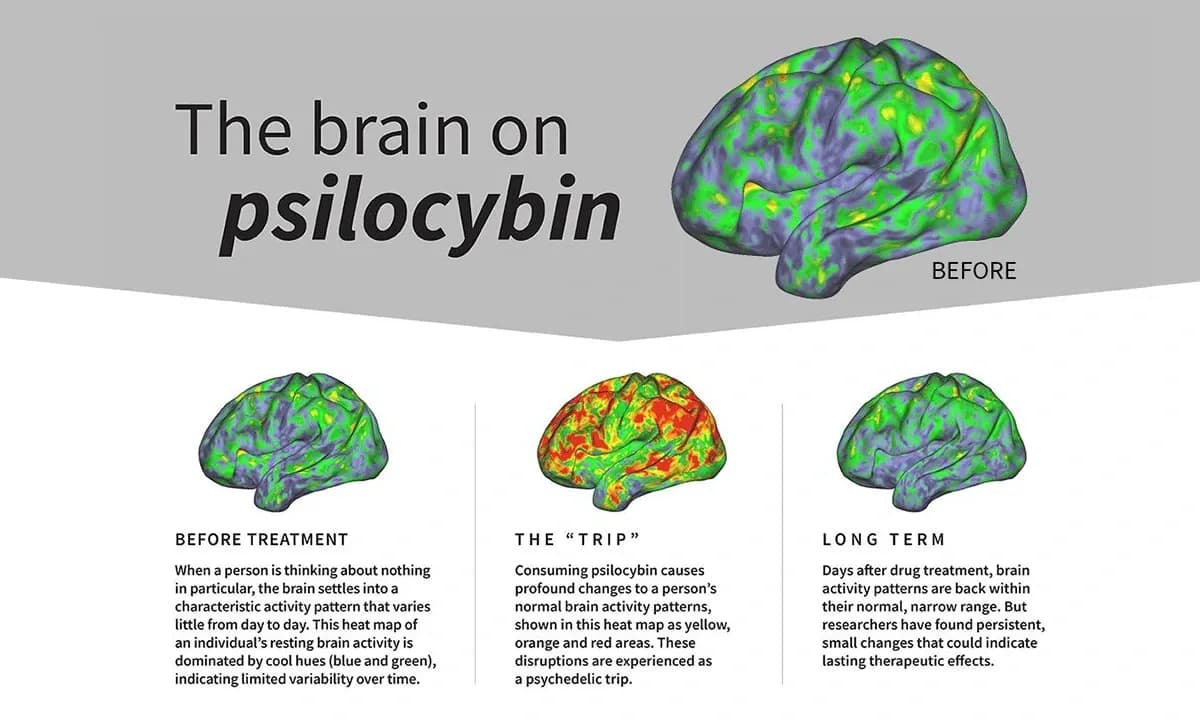
Modern psychedelic research has shown that psilocybin can temporarily influence communication between different brain networks.
Scientists are especially interested in its relationship with:
• Brain connectivity
• Neuroplasticity
• Emotional processing
• Creativity
• Perception
• Consciousness
Research has explored how psychedelic experiences may create new patterns of brain activity and allow people to experience thoughts and emotions from different perspectives.
Some of the world's leading psychedelic studies include:
Research exploring:
• Depression
• Addiction
• Mental health
• Consciousness
• Behavioural science
https://www.hopkinsmedicine.org/psychiatry/research/psychedelics-research
One of the world's leading psychedelic neuroscience programs.
Scientists are studying:
• Brain imaging
• Psilocybin effects
• Mental health applications
• Consciousness research
https://www.imperial.ac.uk/psychedelic-research-centre/
People are interested in mushrooms for many different reasons.
Some are fascinated by the science.
Some are interested in creativity and personal exploration.
Others are curious about the growing research around psychedelic-assisted therapy.
Common topics people are researching include:
Many people report feeling more open-minded, imaginative, and able to view situations from new perspectives.
Some users describe experiences involving deeper self-awareness and emotional insight.
Many people describe feeling more connected to their surroundings, thoughts, and emotions.
Microdosing has become one of Canada's most searched psychedelic topics.
People are interested in learning about possible effects on:
• Focus
• Creativity
• Mood
• Productivity
• Personal development
Scientific research into microdosing is still developing, and more studies are needed to fully understand its effects.
The future of mushrooms in Canada is not just about curiosity, it is about knowledge, discovery, and understanding one of nature’s most fascinating organisms.
The mushroom conversation has started, and Canada is paying attention.